Transvaginal access: a safe technique for tubo-ovarian exploration in infertility? Review of the literature

Abstract
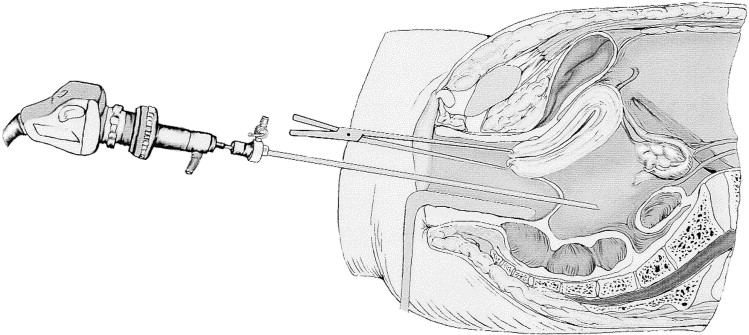
Transvaginal laparoscopy offers an accurate and minimally invasive method for the exploration of the female pelvis in patients with infertility. Access to the pouch of Douglas is gained through a simple needle puncture technique of the posterior fornix using a pre-warmed watery solution as the distension medium. A review of recently published papers and our own experience illustrate the safety of the technique. Transvaginal laparoscopy can be considered as one of the first and safest examples of the recent developments in natural orifice transluminal endoscopic surgery (NOTES).

Introduction

Transvaginal laparoscopy is today accepted as a feasible technique for the investigation of female fertility with the capacity to predict spontaneous ongoing pregnancy comparable to that of laparoscopy. The technique uses saline as the distension medium and is generally performed in an outpatient setting under intravenous sedation or local anesthesia [1, 2].

Transvaginal access has previously been used in culdoscopy, as introduced by Decker and Cherry [3] in the US and Palmer in Europe [4], but was abandoned in the 1970s, particularly when studies suggested that the transabdominal access was superior over transvaginal access for the performance of tubal sterilization [5, 6]. Recently, the Editorial Board of the American Association of Gynecologic Laparoscopists [7] expressed the fear that, after transvaginal access, 1% of infertility patients would develop peritonitis and pelvic abscess. The fear was based on the statement that vaginal tubal sterilization carried with it a 1% abscess rate when performed in an operating room, even with the administration of prophylactic antibiotics. It is questionable on which data this statement has been based and whether it is supported by old and recent data.

Palmer [4] admitted that, after posterior colpotomy, pelvic abscesses are possible and 2% of the sterilizations fail because of fistulization of the ampulla. Whitaker [8] reviewed a series of 585 tubal ligations by colpotomy within a private-practice setting in the US. In his series, no vaginal cuff hematoma and cuff abscess requiring incision and drainage occurred. Gupta et al. [9] analyzed a series of 608 women admitted to the Department of Obstetrics and Gynecology in Chandigarth, India. No prophylactic antibiotics were given and follow-ups occurred at regular intervals up to 12 months. Two cases of serious complications, including one abscess with fistula and one pelvic peritonitis, occurred. In a review of 50,151 laparoscopies, Brosens et al. [10] reported that diagnostic laparoscopy was associated with a 0.08% risk of bowel injury. However, up to 15% of the injuries are not diagnosed during laparoscopy and one of five cases of delayed diagnosis resulted in death [11–13].


In a multinational retrospective survey in 2001, we reported on a series of 3,667 procedures of transvaginal pelvic endoscopies in infertile patients without obvious pelvic pathology [14]. Full-thickness bowel injury occurred in 24 (0.65%) procedures. After an initial experience of 50 procedures, the prevalence of bowel injury was 0.25%. However, all injuries were diagnosed during the procedure and 22 (92%) were managed conservatively without consequences. Both the type of lesion and the risk of delayed diagnosis suggest that the transvaginal access in laparoscopy is associated with a minor risk of bowel injury that, under strict conditions, is treated conservatively. The purpose of this review is to evaluate the risk of bowel injury during transvaginal laparoscopy in recent publications.

Survey design
Using the Pubmed and Scopus searches, we traced 27 original papers on diagnostic transvaginal pelvic endoscopy published between 2000 and 2007 in peer-reviewed journals. We excluded recent publications from the pioneering centers to exclude overlapping data and to include results from new centers with their initial experience. With regard to publications in languages such as Japanese and Polish, data were collected from the available English abstract.


Instrumentation
Transvaginal laparoscopy is performed using a combined system of a Veress needle and trocar with a 3.9-mm outside diameter and a semi-rigid endoscope of 2.7 or 2.9 mm, as developed by Karl Storz GmbH & Co., Tuttlingen, Germany [15–20]. Fertiloscopy is defined as the combination in one investigation of transvaginal hydropelviscopy, dye test, optional salpingoscopy, and hysteroscopy [21]. The slightly different instrumentation as developed by Soprane S.A., Lyon, France, has an outer diameter of 6 mm.
Complications

The 27 publications on transvaginal laparoscopy and fertiloscopy represented a total of 2,843 procedures (Table 1). Access was achieved according to 11 publications, each reporting on more than 50 procedures between 89% and 100%, with a mean of 94%. Access failed in 6% of the cases and the reasons included retroverted uterus, dense adhesions, adnexal mass in the cul-de-sac, nodular retrocervical endometriosis, and obesity.

No major complication, such as life-threatening hemorrhage, bowel injury requiring surgery, sepsis, or abscess formation, occurred. Minor complications occurred in 21 (0.74%) patients (Table 2). These complications included bowel injury in 10 cases (0.35%). All were treated conservatively with antibiotics. Hemorrhage requiring compression or a stitch was reported in six cases, inadvertent puncture of the posterior uterine wall in three cases, and suspected pelvic infection treated with antibiotics in two cases. No long-term or delayed complications were reported.

Prevention of complications

Previous research has shown that, after initial experience with 50 procedures, the risk of bowel injury decreases significantly. The findings of our previous survey [14] clearly demonstrated a decrease in incidence in bowel damage from 1.3% in the first 50 cases to 0.25% once more experience had been gained. Also, in their series, Verhoeven et al. [48] reported a reduced incidence of 0.1% once more than 50 procedures have been performed. However, even in experienced hands, injury during blind access cannot be fully avoided. Sobek et al. [23] recommended ultrasonographically guided transvaginal hydrolaparoscopy to increase the safety of the procedure and decrease the difficulty of access. With this method, no bowel injury occurred in a consecutive series of 460 patients. Mgaloblishvili et al. [22] proposed to proceed first with hysteroscopy using saline for partial filling of the pouch of Douglas, followed by sonohysterosalpingography to clearly visualize and assess the fornix and the pouch of Douglas. Cancellation for transvaginal pelvic endoscopy included:

  • Complete obliteration of the pouch of Douglas
  • Thickening of the posterior fornix by dilated vessels, retro-cervical endometriosis, or adipose tissue
  • Dense adhesions in the pouch of Douglas
  • Presence of organs such as one or both ovaries, fallopian tubes, intestinal loops, myomatous nodule, or retroverted uterus
  • Bilateral hydrosalpinges

In a series of 827 women, cancellation was indicated in six cases after hysteroscopy and in 135 cases after sonohysterosalpingography. No complications occurred in the remaining 702 patients.

Comments
The current findings support the conclusion of the previous report by Gordts et al. [14] that transvaginal access using a small-diameter endoscope for the exploration of the pelvis in infertility is a safe procedure. In contrast with transabdominal access in standard laparoscopy, delayed diagnosis of bowel injury resulting in sepsis or death has not been described. Moreover, bowel injury caused by the small-diameter instrument used in transvaginal pelvic endoscopy can be treated expectantly, although antibiotics are administered in most cases. This, however, will not exclude that inadvertent manipulation may cause a large lesion that requires surgical repair. In the absence of leakage, expectant management with the prophylactic use of antibiotics is apparently justified.


It is unclear as to which literature the statement by Hunt et al. [7] that culdoscopic access is associated with a 1% risk of sepsis has been based. Review of the early literature learns that the current findings on the risks of transvaginal access in women with infertility are in full agreement with the older literature on the risks of diagnostic culdoscopy. Riva et al. [49] published a consecutive series of 2,850 cases with 3.7% failure of access and a complication rate of 1.4%. Eleven recto-sigmoid perforations occurred (Table 3). The lesions were extra-peritoneal and were closed immediately through the colpotomy site, and the culdoscopy procedure was discontinued. Follow-up examination revealed no complications referable to these recto-sigmoid injuries. Diamond [50] used improved instrumentation and brighter illumination with fiber optics and published in 1978 a continuous series of 4,000 outpatient procedures of diagnostic culdoscopy in infertility. In his consecutive series of 4,000 culdoscopies performed between 1968 and 1978, no death occurred. Bleeding was prolonged and required suturing in six patients. Pelvic infection occurred in three cases, despite the routine use of antibiotics, and one patient developed a pelvic abscess. Inadvertent punctures were made into the rectum in five cases, all of them occurring in the first five years of the series and none later. None of the patients required hospitalization or laparotomy; all were treated with antibiotics and conservative therapy. No inadvertent puncture of other viscera occurred. In four patients, the puncture of ovarian cysts that had prolapsed into the cul-de-sac occurred. Diamond [50] concluded that, with proper preparation and organization, diagnostic culdoscopy could be carried out as a routine procedure in any adequately equipped outpatient facility in or outside the hospital. It is safe, effective, and rapid, taking an experienced physician and team no more than 10 or 15 min to perform. He proposed that outpatient culdoscopy should be returned to gynecologic training programs. With regard to the available data in the literature, the statement of the Editorial Board of the American Association of Gynecologic Laparoscopists is, therefore, astonishing. We would agree with Hunt et al. [7] that a thousand, or even several thousand, cases are required to make a statement on the safety of a new technique. The world literature during the last 40 years includes many thousands of procedures and has consistently endorsed the safety of transvaginal access in diagnostic pelvic endoscopy in women with infertility.


In infertility exploration, transvaginal laparoscopy is one of the first applications of the recent developments in natural orifice transluminal endoscopic surgery (NOTES) [51]. Considering the previously discussed results, the technique should deserve a more widespread use as an ambulatory diagnostic tool in the exploration of the infertile patient.

Source –  https://gynecolsurg.springeropen.com/articles/10.1007/s10397-008-0374-1


Care Womens Centre
 is Known as Best centre for IVF in indore and provide the best infertility and test tube baby treatment in Indore. if you are looking for Best fertility hospital in indore you should visit care women’s Centre IVF Hospital in Indore.

Book an appointment call now 8889016663 or visit www.carewomenscentre.com for more information.

Please go through our social media :
like our page to no more about ivf
Facebook :  https://www.facebook.com/CareWomensCentre/
Please do follow on Instagram
Instagram : https://www.instagram.com/carewomenscentre/


To More Post: Role of transvaginal hydrolaparoscopy in the investigation of female infertility: a review of 1,000 procedures
Best fertility hospital in indore | Fertility centre in indore

Why I am Not Getting Pregnant?
Get the answers of all your queries from fertility expert Book Your appointment now.
For more information, kindly call: 88890–16663 or visit www.carewomenscentre.com for more details.

Are you Search for the Best centre for IVF in Indore? Care Womens Centre is India’s number 1 IVF center in Indore. Care Womens Centre has been at the forefront of infertility treatment in indore offering world-class services and superior clinical outcomes. We bring to you over 10 years of collective expertise and leadership in women’s health. We give you the very best chance, whether this is your first attempt with fertility treatment, or you've tried but failed elsewhere.

Best fertility hospital in indore, ivf specialist in indore, test tube baby center in indore, ivf treatment cost in indore, Best centre for IVF in indore, affordable ivf cost in indore, infertility treatment in indore, ivf center in indore, ICSI treatment in indore, fertility centre in indore

Test tube baby center in indore | Affordable ivf cost in indore

निःसंतानता के समस्या को झेल रहे दंपति का दर्द क्या होता है इसे समझना बहुत मुश्किल है । घर आँगन और महिला की सूनी गोद की पीड़ा को शब्दों में व्यक्त नहीं किया जा सकता है। निःसंतानता के मामलों में आईवीएफ बेहतर तकनीक है जिससे हज़ारों लोगों को फायदा मिला है और आज वो अपने ज़िन्दगी के अधूरेपन को पूरा कर पाए है ।

निःसंतानता से जुड़ा कोई भी सवाल के जवाब लिए कॉल करें 88890–16663 or visit www.carewomenscentre.com for more details.

care women's centre is a one of the Best infertility treatment in indore, India. At the Care women center, we provide treatment of infertility by latest techniques for assisted conception and reproduction. Get the best IVF Treatment in Indore at care women center with complete infertility care at low cost. Book your appointment now!

Best fertility hospital in indore, ivf specialist in indore, test tube baby center in indore, ivf treatment cost in indore, Best centre for IVF in indore, affordable ivf cost in indore, infertility treatment in indore, ivf center in indore, ICSI treatment in indore, fertility centre in indore

IVF center in indore | Best Fertility hospital in indore

New hope for childless couples, now IVF treatment available at affordable cost.
Having a child post marriage is a very important part of life. The pain of not having a child is only felt by parents who cannot conceive. Infertility is a global problem affecting millions of people.
Making babies is now possible for more childless couples at Care Women Centre Indore. With the treatment available now, more such couples will be able to welcome their babies home
For more information, kindly call: 88890–16663 or visit www.carewomenscentre.com for more details.

Care womens centre is one of the Best IVF center in Indore with highest sucess rates.  We provide cost effective IVF, IUI, ICSI treatment for achieving pregnancy. One of the leading test tube baby center in Indore. visit our website and book an appointment https://www.carewomenscentre.com and call us 8889016663

ICSI treatment in indore, Best fertility hospital in indore, ivf specialist in indore, test tube baby center in indore, ivf treatment cost in indore, Best centre for IVF in indore, affordable ivf cost in indore, infertility treatment in indore, ivf center in indore, fertility centre in indore

Role of transvaginal hydrolaparoscopy in the investigation of female infertility: a review of 1,000 procedures

Abstract

Transvaginal hydrolaparoscopy is a culdoscopic approach for the inspection of the posterior pelvis, but, in contrast to culdoscopy, uses an aqueous solution for the distension of the pelvic cavity and small diameter optics. The technique is used for diagnostic purposes in patients with infertility and is performed under local anesthesia or conscious sedation in an ambulatory surgical center. We report on a continuous series of 1,000 patients with infertility and without obvious pelvic pathology. Access and good visualization was obtained in 96.8% of the patients. The main complications were intraperitoneal bleeding and bowel perforation, which after the initial period occurred respectively in 1.9 and 0.1%. All complications were managed conservatively, and no major complication occurred. Clinically significant pathology was diagnosed in 25% of the patients, which allowed immediate triage of the patients for further management. Transvaginal hydrolaparoscopy can be proposed as a first line technique to replace hysterosalpingography and diagnostic laparoscopy in the exploration of patients with unexplained infertility.

Introduction

In Europe over the past 40 years, endoscopic evaluation of the pelvis has become an integral part of the infertility work-up. In routine practice, hysterosalpingography (HSG) is the first-line investigation and, if normal, laparoscopy is frequently delayed for 6 months or more. Laparoscopy is indeed an invasive procedure, associated with potentially serious complications, and together with hospitalization it can also be an expensive procedure. On the other hand, HSG is inferior to the chromopertubation test for the diagnosis of tubal patency [1] and also has a low sensitivity for the diagnosis of pelvic endometriosis and adhesions. If laparoscopy is performed as a first-line investigation on all infertile patients, there will be a large number of patients with normal findings or with minor pathology that has no or doubtful impact on the management of infertility. 

It has been argued that with the advent of ART, laparoscopy can be omitted from the infertility work-up when there is no abnormal contributing history and the HSG is normal and, as a consequence, the cost of fertility treatment is reduced without compromising success rates [2]. Karande et al. [3], however, found in a prospective randomized trial that a higher pregnancy rate with lower costs is achieved with a traditional treatment algorithm than with IVF-embryo transfer as a first line-therapy.

We therefore wish to report on a continuous personal (H.V.) series of 1,000 procedures of transvaginal laparoscopy (THL), which were performed in combination with the mini-hysteroscopy and chromopertubation test as a first-line investigation of female infertility [4]. The combination of the three procedures has been coined transvaginal endoscopy (TVE).

Materials and methods

THL was discussed with all women who met prospectively established exclusion and inclusion criteria. In all patients, the indication was primary or secondary infertility. The patients had a complete history, physical examination and transvaginal sonography. Patients were excluded if they had an indication for operative laparoscopy, abnormal pelvic findings such as fixed retroverted uterus, rectovaginal endometriosis, large ovarian cyst or obliterated cul-de-sac, or an upper vaginal stenosis. Patients with vaginal or pelvic infection were first treated before THL was performed.

THL was used as described by Gordts et al. [5]. With the patient in the dorsal decubitus position, only a limited amount of fluid is required to have the tubo-ovarian structures floating in the excavation of the posterior pelvis. We used a narrow-diameter (<3.5 mm), foroblique 30°, wide-angled and rigid optic, a high intensity light source and a digital camera. Inspection of the pelvic structures was achieved without grasping or manipulation. At the end of the procedure a chromopertubation test was performed and, when indicated, salpingoscopy was added. All interventions were performed under conscious sedation as an office procedure in an outpatient surgical suite.

Transvaginal laparoscopy was considered complete if the tubo-ovarian structures, pelvic sidewalls and cul-de-sac could be seen, or if pathology was diagnosed that indicated the need for operative intervention or ART.


Results
A total of 1,000 THLs were performed during the period starting from 1998 until 2003. Thirty-two (3.2%) failures occurred with failed access in 11 (1.1%) and absent or poor visualization in 21 (2.1%). In total, 968 (96.8%) of the procedures were completed. No pathology or pathology of minor clinical significance was found in 736 (76%). In the group with completed procedures, unexpected clinically significant pathology was diagnosed in 240 (25%) and included mainly ovarian endometriosis, tubo-ovarian adhesions, isthmic block and hydrosalpinges. The diagnostic findings resulted in 36 (3.7%) operative laparoscopies and 204 (21.1%) medical therapies and ARTs.


No major complication occurred in this series. Intraperitoneal bleeding was seen in 23 (2.3%) of the patients and occurred on the posterior wall of the uterus (n=13), parametrium (n=2), ovary (n=2), omentum (n=1) and adhesions (n=5). Bowel perforation occurred in 5 (0.5%) and was managed conservatively with antibiotics. Infection occurred in two (0.2%).


The correlation of the failures (no access or no visualization) with the experience showed that 5 (10%) failures occurred in the first 50 procedures and 26 (2.8%) in the subsequent 950 procedures (P=0.018). Bleeding occurred in 5 (10%) of the first 50 cases and 18 (1.9%) of the following 950 cases (P=0.004). Bowel perforation occurred in 4 (8%) of the first 50 cases and in 1 (0.1%) of the following 950 cases (P<0.0001). 

Discussion

By using TVE as a first-line investigation of female infertility, we avoided HSG in 96.8% and laparoscopy in 93.2% of the patients. In 24% of the patients, unexpected major pathology was diagnosed and recommendations for operative laparoscopy, medical therapy or ART could be made.

Several studies have validated the feasibility, reproducibility, diagnostic accuracy, acceptability and safety of the procedure [6]. Different centres have reported access in over 95% and normal findings in 41 to 59% of the cases. In this series of 1,000 consecutive cases, access and visualization of the pelvic structures were achieved in 96.8% of the patients. The performance of THL is defined by visualization of the ovaries, fallopian tubes, posterior wall of the uterus, ovarian and uterosacral ligaments, sidewall of the posterior pelvis and cul-de-sac. In this series, these structures were normal or showed pathology of minor significance in 76% of the patients.

The potentially serious complication of transvaginal access is rectal perforation and sepsis. In a survey of 3,667 procedures the incidence of bowel perforation was 0.65%, which decreased after the initial experience to 0.25%. No delayed diagnosis and sepsis occurred, and 92% of the cases were managed with outpatient antibiotics [7]. In the present series minor bleeding occurred in 2.5% and bowel perforation in 0.5% of the patients. Analysis of the occurrence of complications in function of experience confirmed the importance of the learning curve. After the initial 50 cases, the complication rate of intraperitoneal bleeding and bowel perforation decreased significantly to 1.9 and 0.1%, respectively. It should, however, be noted that even in experienced hands these complications can occur and, therefore, the patients need to be informed. However, in this series no major complication such as sepsis occurred and, similar to previous series, most bowel perforations were managed conservatively with antibiotics without consequences.

As a first-line procedure for the investigation of female infertility, TVE is in direct competition with HSG. The prognostic value of the chromopertubation test has been shown to be better than that of HSG [1]. Four authors reported abnormal findings at THL in 44% of 241 patients with normal or suspected hysterosalpingography [6]. Shibahara et al. [8] compared HSG versus THL in a series of patients with and without a history of Chlamydia infection and found that THL was superior for the diagnosis of peritubal adhesions. The additional advantage of THL for tubal exploration is the ability to examine directly the tubal mucosa by salpingoscopy. Salpingoscopy is a better predictor for pregnancy outcome after tubal reconstructive surgery than routine investigation by HSG and standard laparoscopy [9, 10].

Fatum et al. [2] suggested that in patients with a normal HSG, laparoscopy would be superfluous and patients should undergo up to six cycles of gonadotropins and IUI and then undergo IVF if they continue to be infertile. However, in a recent study Capelo et al. [11] found significant pelvic pathology in one third of the patients failing to conceive after four ovulatory cycles of clomiphene citrate and concluded that early endoscopic diagnosis of such pathology would have allowed the couple to proceed directly to IVF.

Cicinelli et al. [12] found in a randomized controlled trial that THL in combination with mini-hysteroscopy in an outpatient setting was better tolerated by the patients than HSG. Finally, HSG is a diagnostic X-ray procedure that exposes the bladder, ovary and colon to radiation. The organ-specific radiation doses of HSG for the bladder and colon are estimated at 4.67 and 2.82 mGy, respectively. It is now generally accepted that there is no threshold dose below which radiation exposure does not cause cancer, and the attributable risk of diagnostic X-rays is estimated to range from 0.6 to 1.8 of cases of cancers per year [13].

When an accurate infertility exploration can be performed with a minimally invasive procedure and a reliable treatment exists, an early diagnosis followed by the most appropriate, effective treatment can greatly reduce the monthly failures and the sense of frustration for the couple, particularly when age and time are additional unfavorable factors. 


Our current approach of exploring female fertility after 1 year or more of infertility may paradoxically lead to undertreatment as well as overtreatment.  

Recent prospective population-based studies have demonstrated that the time to clinical pregnancy in most women with normal fertility is not more than 6 months [14, 15]. It can therefore be assumed that already after six cycles with fertility-focused intercourse, irrespective of their age, most women with normal fertility have conceived and that the remaining group is largely composed of couples faced with subfertility. Today, when female fertility can be explored accurately with a minimally invasive procedure, such as TVE [4], and a reliable treatment exists for many major disorders, a prolonged waiting period is outdated [16].

It is concluded that in women with previously normal cycles infertility should be investigated already after a 6-month period of fertility-focused intercourse and that transvaginal endoscopy, which combines minihysteroscopy and transvaginal hydrolaparoscopy, can be proposed as a first-line technique. 

Source- https://gynecolsurg.springeropen.com/articles/10.1007/s10397-004-0030-3  

Care Womens Centre is one of the Best Fertility hospital in Indore. We are a highly successful IVF center in Indore. In our Fertility Hospital, we offer all types of investigation and treatment under one roof. Our hospital has the most affordable IVF center in Indore with all advanced equipment and highly skilled doctors. Besides the treatment, a balanced lifestyle and stress management also plays an important part. At our Best fertility hospital, we also stress on lifestyle and stress management before any further advanced treatments. Book an appointment call now  8889016663 or visit https://www.carewomenscentre.com for more information.

Please go through our social media :

like our page to no more about ivf

Facebook :  https://www.facebook.com/CareWomensCentre/

Please do follow on Instagram

Instagram : https://www.instagram.com/carewomenscentre/


To More Post: Lithopedion diagnosed during infertility workup: a case report

IVF specialist in Indore | Test tube baby center in Indore

Eat more complex(“Slow”) carbs and limit highly processed ones.
Your body digests bad carbs (like cookies, cakes, white bread and white rice) quickly, and turns them into blood sugar.

To know more about #IVF call 88890–16663 or visit www.carewomenscentre.com for more details.


Care Womens Centre is one of the Best fertility hospitals in Indore. Which is well-accepted internationally for Infertility and IVF treatment. Provides you International Standard Infertility Treatment along with assisted reproductive technologies like IUI, IVF, ICSI ,etc at affordable IVF treatment / Test tube Baby Treatment cost along with the satisfaction of being consulted by the most renowned IVF specialist in Indore. Come join best centre for IVF treatment in indore in our voyage towards better healthcare facilities for infertile couples and experience the Best Infertility Treatment in Indore. To book an appointment call now  88890-16663 or visit www.carewomenscentre.com for more information.

Best fertility hospital in indore, ivf specialist in indore, test tube baby center in indore, ivf treatment cost in indore, Best centre for IVF in indore, affordable ivf cost in indore, infertility treatment in indore, ivf center in indore, ICSI treatment in indore, fertility centre in indore

IVF center in indore | ICSI treatment in indore

When picking foods that increase fertility, opt for plant protein.Get less protein from red meat and more fish.

To know more about #IVF call 88890–16663 or visit www.carewomenscentre.com for more details.

Dr Shweta Kaul Jha is one of the leading IVF specialists in Indore, providing a wide variety of infertility treatments and procedures such as IVF, ICSI, genetic testing and many more at affordable IVF cost in Indore. Care Woman’s Centre is among one of the best fertility hospitals in Indore and your one stop destination for infertility issues.

Best fertility hospital in indore, ivf specialist in indore, test tube baby center in indore, ivf treatment cost in indore, Best centre for IVF in indore, affordable ivf cost in indore, infertility treatment in indore, ivf center in indore, ICSI treatment in indore, fertility centre in indore

Best fertility hospital in indore | IVF treatment cost in indore

For a fertility diet to improve egg quality, load your plate with fruit and veggies.
To know more about #IVF call 88890–16663 or visit www.carewomenscentre.com for more details.

Are you a childless couple frantically searching the Best IVF center in India with Highest IVF success rate? If yes, Care Womens Centre is one of the Best fertility hospitals and IVF center in indore.  Provides you International Standard Infertility Treatment along with assisted reproductive technologies like IUI, IVF, ICSI ,etc at affordable IVF treatment / Test tube Baby Treatment cost along with the satisfaction of being consulted by the most renowned IVF specialist in Indore. it requires of you. To make your appointment with us you can visit our website or call us. Book an appointment  https://www.carewomenscentre.com  and call us 8889016663.

Best fertility hospital in indore, ivf specialist in indore, test tube baby center in indore, ivf treatment cost in indore, Best centre for IVF in indore, affordable ivf cost in indore, infertility treatment in indore, ivf center in indore, ICSI treatment in indore, fertility centre in indore

Best centre for IVF in indore | IVF treatment cost in indore

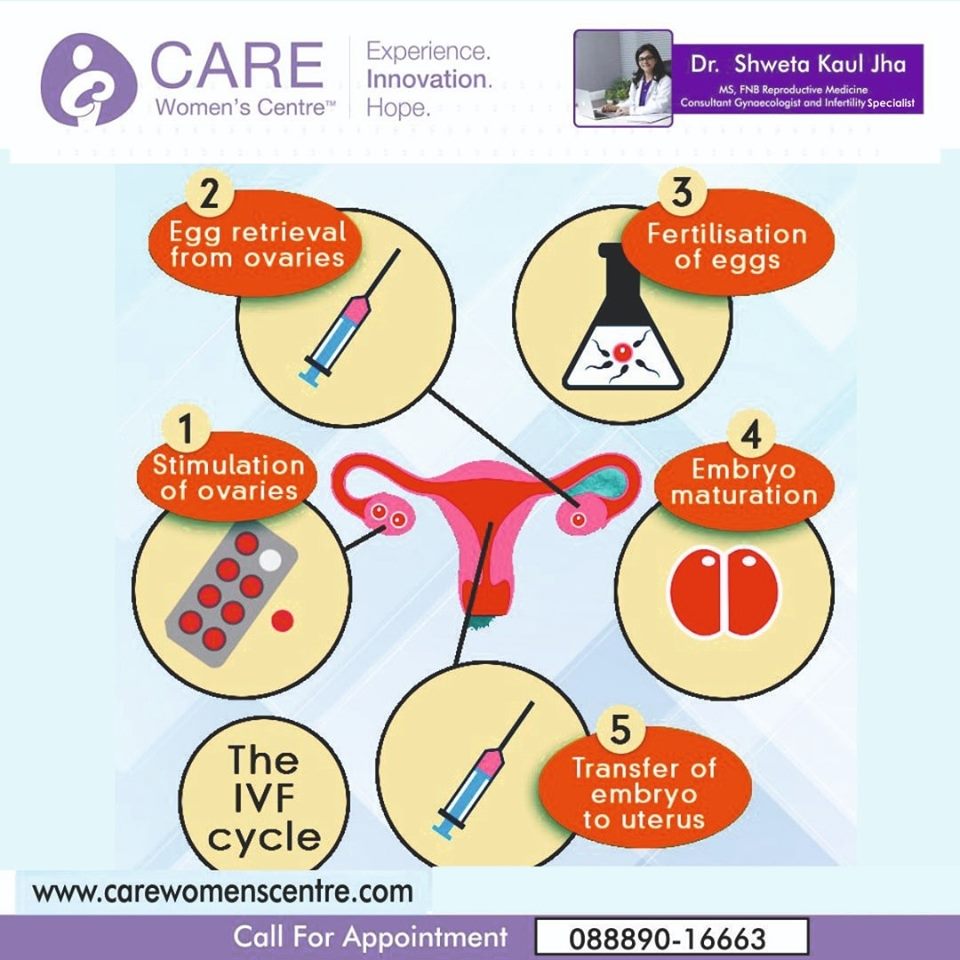
The IVF cycle

To book an appointment call 88890–16663 or visit www.carewomenscentre.com for more details.

Are you Search for Best fertility hospital in indore? Care Womens Centre is India's one of the Best fertility hospital and Test tube baby centers in Indore. Care Womens Centre offers excellent treatment for IVF, ICSI, IUI, Test tube baby treatment and infertility treatment in indore. Care Womens Centre, Madhya Pradesh, India. Book an appointment  https://www.carewomenscentre.com  and call us 8889016663.

Best fertility hospital in indore, ivf specialist in indore, test tube baby center in indore, ivf treatment cost in indore, Best centre for IVF in indoreaffordable ivf cost in indore, infertility treatment in indore, ivf center in indore, ICSI treatment in indore, fertility centre in indore