If a woman wishes to become pregnant, a doctor may prescribe medications to regulate menstrual periods and encourage ovulation. Surgery may be an option if medication does not improve fertility.
Laparoscopic ovarian drilling is a surgical option. In this procedure, the surgeon makes small cuts in the abdomen and inserts a needle with an electrical current.
They use the electric current to destroy a small amount of tissue that produces testosterone on the ovary. Decreasing testosterone levels may allow regular ovulation to occur.
Tips for increasing fertility
Below are some lifestyle tips that can help increase fertility.
Weight control
For people carrying excess weight, losing weight may help balance hormonal production and increase the chances of ovulation and pregnancy.
According to the OWH, even a 10 percent weight loss may help a person with excess weight and fertility problems restore their normal ovulation.
People with a low weight who have difficulty conceiving may want to see their doctor as well, as this may be another risk factor for infertility.
Managing stress
Finding healthful ways to manage stress may also boost fertility.
Long-term stress can affect hormones. For example, ongoing stress can increase cortisol in the body, which may trigger a rise in insulin production. High insulin levels can lead to an imbalance in female sex hormones and infertility.
Tips for managing stress include:
getting regular exercise
balancing work and home life
spending time with friends and family
getting enough sleep
Dietary changes
For some people with PCOS, a low glycemic diet may improve symptoms and fertility.
A low glycemic diet involves eating fewer foods that cause a spike in blood sugar levels.
Avoiding spikes means that blood sugar levels become more stable, resulting in lower insulin levels and less testosterone production.
Other factors that affect fertility
PCOS is only one of the many possible causes of female infertility. Some common reasons include:
Endometriosis: A growth of uterine tissue outside of the uterus can also lead to infertility, especially when it develops in the fallopian tubes.
Structural problems: A problem with the structure of the fallopian tubes or other parts of the reproductive system can make it difficult to become pregnant.
Fibroids: These noncancerous tumors in the uterus can cause fertility problems by preventing implantation.
However, many women with fertility problems — including PCOS — can become pregnant with medical help.
The first step to take to increase the chances of pregnancy is for an individual to see a doctor and get an accurate diagnosis. By doing this, they can start treatment as soon as possible.
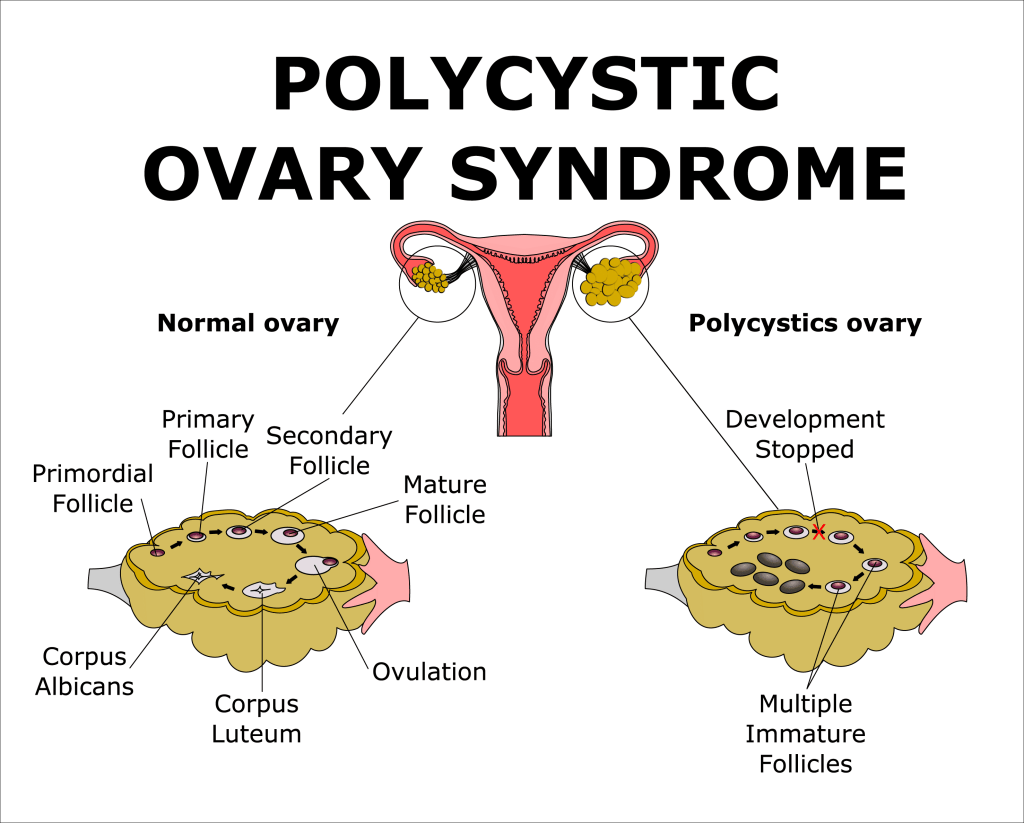
Every month, in women of childbearing age, tiny fluid-filled cysts known as follicles develop on the surface of the ovary. Female sex hormones, including estrogen, cause one of the follicles to produce a mature egg. The ovary then releases this egg, and it breaks out of the follicle.
In women who have polycystic ovary syndrome, or PCOS, there is an imbalance in female sex hormones. The imbalance may prevent the development and release of mature eggs. Without a mature egg, neither ovulation or pregnancy can occur.
The hormone imbalance may also include an abnormal increase in testosterone, which is primarily a male sex hormone. Women also produce testosterone, although it is usually in small amounts.
The United States’ Office on Women’s Health (OWH) note that PCOS affects 5–10 percent of women aged 15–44 years. They describe PCOS as a “common and treatable cause of infertility.”
Causes
Experts do not know exactly what causes PCOS, but it may involve genetic factors. If a woman’s mother or sister has the condition, she has a higher chance than others of developing it.
Along with a genetic link, excess insulin in the body also increases a woman’s risk of developing PCOS. Insulin is a hormone that the pancreas produces, and the body uses to convert sugar in food into energy.
Women with PCOS often have insulin resistance. Insulin resistance involves the body’s inability to lower blood sugar levels correctly. Blood sugar levels can become too high, which causes yet more insulin production.
Too much insulin also increases testosterone production, which leads to some of the symptoms of PCOS.
Symptoms
Symptoms can occur at any age or time during a person’s reproductive years. Symptoms can also change over time.
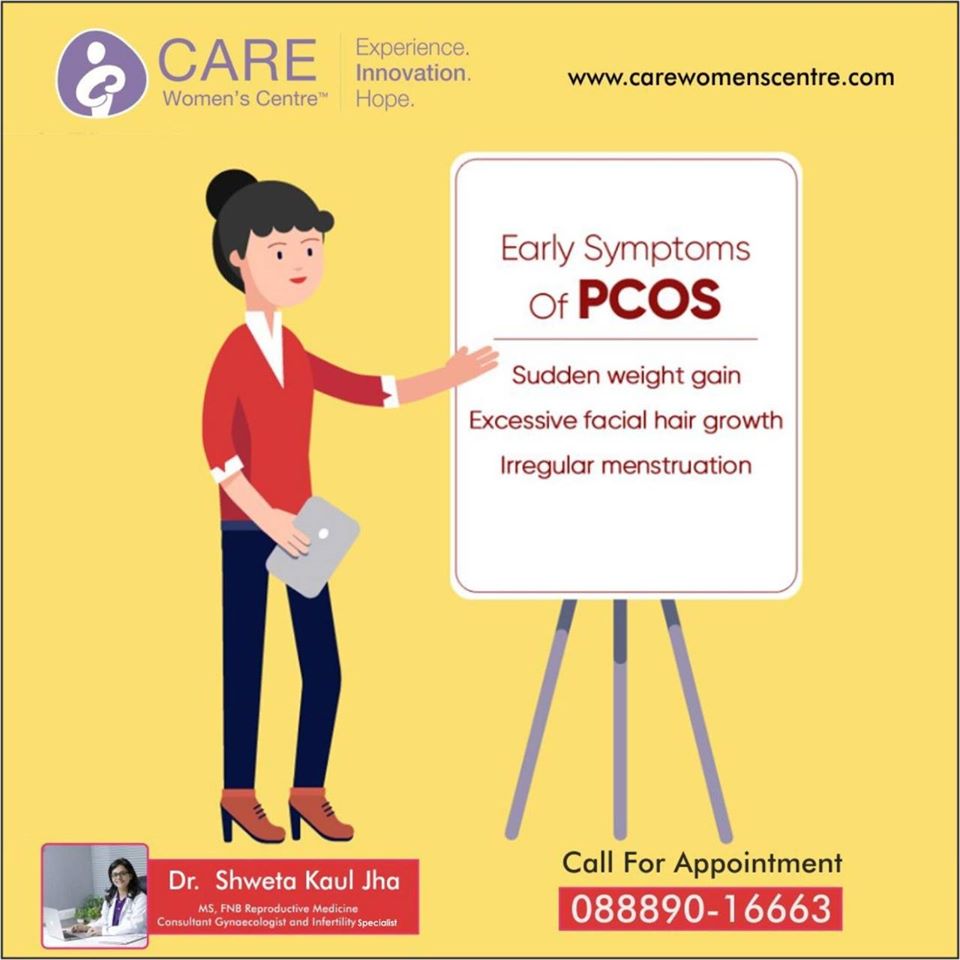
Some of the most common symptoms of PCOS include the following:
abnormal hair growth on the face, chest, or back
acne or a darkening of the skin
weight gain
thinning hair on the head
infertility
irregular periods
ovarian cysts
depression
increased skin tags
Not everyone with PCOS will have the same signs or symptoms.
Effects on fertility
PCOS can affect a person’s fertility in different ways.
Ovulation problems are usually the primary cause of infertility in women with PCOS. Ovulation may not occur due to an increase in testosterone production or because follicles on the ovaries do not mature.
Even if ovulation occurs, an imbalance in hormones may prevent the lining of the uterus from developing properly to allow for implantation of the mature egg.
Due to unbalanced hormones, ovulation and menstruation can be irregular. Unpredictable menstrual cycles can also make it difficult to get pregnant.
Treatment
Currently, there is no cure for PCOS. However, treatment can increase the chances of conceiving in those who wish to become pregnant. It can also help people to manage their symptoms.
Symptoms vary between individuals, and so treatment is not always the same. Options also depend on whether or not a person wishes to become pregnant.
Treatment for PCOs symptoms may include:
Birth control pills to help correct hormonal imbalances.
Insulin-sensitizing drugs to improve the body’s use of insulin and so testosterone production, too.
In the case of diabetes, medication to control blood sugar levels.
Exercise and healthful eating to help boost overall wellbeing and control weight.
Maintaining a healthy weight can help reduce insulin and testosterone levels and improve symptoms.
Care Womens Centre is one of the best fertility hospitals and IVF centersin Indore for infertility treatment. We provide all infertility treatment in Indore at very affordable price. Dr Shweta Kaul Jha has many years experienced in infertility treatment. If you are suffering from infertility and are looking for the best centre for IVF inIndore, then come to Care Womens Centre Indore. Book an appointment today call now 8889016663 and visit https://www.carewomenscentre.com/ for more information.
Ovaries are the female gonads — the primary female reproductive organs. These glands have three important functions: they secrete hormones, they protect the eggs a female is born with and they release eggs for possible fertilization. The ovary is an organ found in the female reproductive system that produces an ovum. These ovaries travels down the fallopian tube into the uterus, where it may become fertilized by a sperm. There is an ovary found on each side of the body.
Size & Location :-
Human females are typically born with two ovaries stemming from the uterus. Before puberty, ovaries are just long bundles of tissue. As the female matures, so do her ovaries. When mature, ovaries are about the size of a large grapes.
The ovaries lie on either side of the uterus against the pelvic wall in a region called the ovarian fossa. They are held in place by ligaments attached to the uterus. They’re located in the lower abdomen on both sides of the uterus. Women have two ovaries that produce eggs as well as the hormones estrogen and progesterone.
Cyst :-
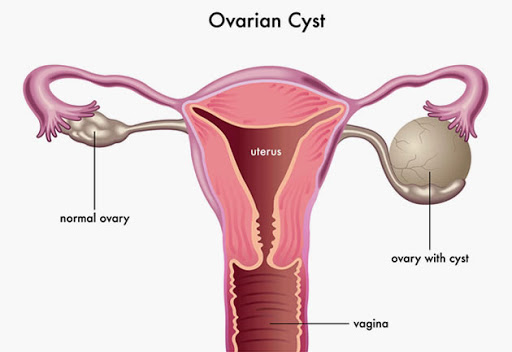
A fluid-filled sac called a cyst will develop on one of the ovaries. In most cases, the cysts are painless and cause no symptoms. But sometimes these cause some symptoms and the symptoms can be :-
Symptoms :
Lower back pain
Pain in thighs
Pelvic pain during menstrual flow
Irregular menstrual flow
Painful intercourse
Vomiting
Nausea
Abdominal pain
Swelling on abdominal area
Sometimes the ovarian cyst are more painful and the symptoms can be dizziness, fever, high pelvic pain. If ovarian cyst symptoms reaches high than one should concern to a doctor. Doctor may recommend the surgery.
Risk factors in a female body by an ovarian cyst :-
Hormonal problems which include taking the fertility drug which is used to cause you to ovulate.
Pregnancy sometimes, the cyst that forms when you ovulate stays on your ovary throughout your pregnancy.
Endometriosis is the condition causes uterine endometrial cells to grow outside your uterus. Some of the tissue can attach to your ovary and form a growth.
A severe pelvic infection , the infection spreads to the ovaries, it can cause cysts.
A previous ovarian cyst if a female have had one, you’re likely to develop more.
Hormonal problems which include taking the fertility drug which is used to cause you to ovulate.
Pregnancy sometimes, the cyst that forms when you ovulate stays on your ovary throughout your pregnancy.
Endometriosis is the condition causes uterine endometrial cells to grow outside your uterus. Some of the tissue can attach to your ovary and form a growth.
A severe pelvic infection , the infection spreads to the ovaries, it can cause cysts.
A previous ovarian cyst if a female have had one, you’re likely to develop more.
Treatment for ovarian cyst :-
Birth control pills
Laparoscopy
Ovarian cyst prevention – update your doctor about pelvic pain, irregular menstrual flow etc..
Laparotomy
Removal of the ovarian cyst by surgery
Are you not able to give birth to a child? If you are worried about this then you should come to Care Womens Centre Indore. Care Womens Centre is a best fertility hospital in Indore, which provides treatment like IVF treatment, infertility treatment, ICSI treatment, test tube baby treatment at very low cost. Dr Shweta Kaul Jha is an IVF expert of this Care Womens Cente. If you are looking for the best IVF specialist for IVF in Indore, then come Care Womens Centre Indore. Book an appointment today call now 8889016663.
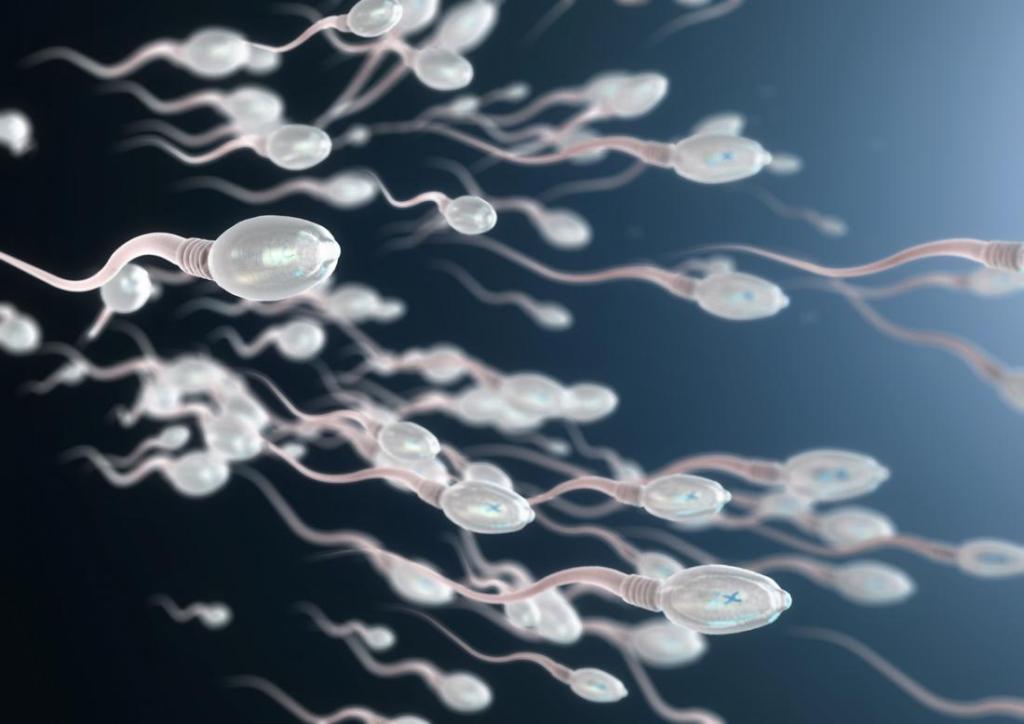
Sperm motility is the ability of sperm to move efficiently. This is important in fertility because sperm need to move through the woman’s reproductive tract to reach and fertilize her egg. Poor sperm motility can be a cause of male factor infertility.
In this article, we look at the impact of sperm motility on fertility, as well as the causes of poor sperm motility, and what can be done to improve it.
What is sperm motility?
There are two kinds of sperm motility, referring to the way the individual sperm swim.
Progressive motility refers to sperm that are swimming in a mostly straight line or large circles.
Non-progressive motility refers to sperm that do not travel in straight lines or that swim in very tight circles.
For the sperm to get through the cervical mucus to fertilize a woman’s egg, they need to have progressive motility of at least 25 micrometers a second.
Poor sperm motility or asthenozoospermia is diagnosed when less than 32 percent of the sperm are able to move efficiently.
How does it affect fertility?
Worldwide, around 60 to 80 million couples are affected by infertility, and the rates vary from country to country.
In the United States, the rate is thought to be around 10 percent of couples. The figure is based on the definition of infertility as the inability to conceive after 12 months of trying.
Male factor infertility is when an issue with the man’s biology makes him unable to impregnate a woman. It accounts for between 40 to 50 percent of infertility cases and affects around 7 percent of men.
Male infertility is usually the result of deficiencies in the semen, the most common of which are:
low sperm count or oligospermia
poor sperm motility
abnormal sperm shape or teratospermia
Around 90 percent of male infertility issues are caused by low sperm count, but poor sperm motility is an important factor also.
Care Womens Centre is one of the best IVF centers in Indore for infertility treatment, where on Dr Shweta kaul jha is very experienced ivf specialist at Care Womens Centre. Dr Shweta kaul jha holds the merit of being the first and only board certified reproductive medicine specialist of Madhya Pradesh. If are you searching the Best centre for IVF in Indore, so come at Care Womens Centre Indore. Book an appointment now today with best fertility centre in Indore, call us this number 8889016663.
This is the series of events occurring in the females every 28 to 30 days through out the child bearing the period of about 36 years. The gamete formation in female is a cyclic activity that takes about 28/29 days and involves changes on the structure and function of the entire reproductive system. It is called as menstrual cycle. The menstrual cycle occur only in primates . (Monkey, apes and Human being). The first mensuration begins at puberty and is called as menarche. The menstrual cycle in human last at 28 to 30 days. In human females, menstrual cycle ceases around 50 years of age and this stage is term as menopause.
The menstrual cycle consists of 3 phases :-
1) Follicular Or proliferating phase
2) Luteal Or secretory phase
3) Menstrual Or bleeding phase
Proliferative phase : At this stage an ovarian follicle, stimulate by FSH is growing towards the maturity and is producing oestrogen, which stimulates proliferation of functional layers of the endometrium in preparation for the reception of a fertilized ovum . The endometrium thickens, become vascular and rich in mucus secreting glands. This phase ends when ovulation occurs and oestrogen production by the follicles decline.
Secretory phase : after ovulation, the cells lining the ovarian follicles are stimulate by LH and develop into the corpus luteum, which produce progesterone and some oestrogen. Cervical mucus, normally thick, dry become thin elastic And watery and body temperature rises by small but measurable amount immediately following ovulation.Some women experience abdominal discomfort in the middle of the cycle, thought to correspond to rupture of the follicle .
Menstrual phase : the phase last for 3-4 days .If the fertilization not occur, the secondary oocyte undergoes autolysis and progesterone inhibit the release of LH from pituitary.
Reduction of LH hormone . The lining of fallopian tube break down. The cast off uterine and fallopian tube tissue, blood that oozes from rapture endometrial blood vessels and tissue fluid from the endometrial surface pass out through the vaginal opening , this process is called mensuration or menstrual flow.
In some females the menstrual cycle is irregular due to some reason. The reason for irregular menstrual flow are:-
Having an intrauterine device (IUD)
Changing birth control pills or using certain medications
Too much exercise
Polycystic ovary syndrome (PCOS)
Pregnancy
Stress
Overactive thyroid (hyperthyroidism) or underactive thyroid (hypothyroidism
Thickening of or polyps on the uterine lining
Uterine fibroids
Thyroid problems
Endometriosis
Lack of luteinising hormone (LH)and follicles stimulating hormone (FSH)
High body weight
Low body weight
The Care Womens Centre is named among the top ten IVF hospitals in Madhya Pradesh. The specialty of this hospital is that IVF, IUI, ICSI, Embryo Donor, Embryo Freezing and infertility treatment are done here at very low cost. Dr. Shweta Kaul Jha at Care Womens Center is a very experienced IVF specialist who has been providing happiness to childless couples to become parents for many years. If you are looking for the best fertility hospital in Indore, then you should visit Care Womens Centre Indore. Book an appointment today call now 8889016663 and visit https://www.carewomenscentre.com/ for more information.
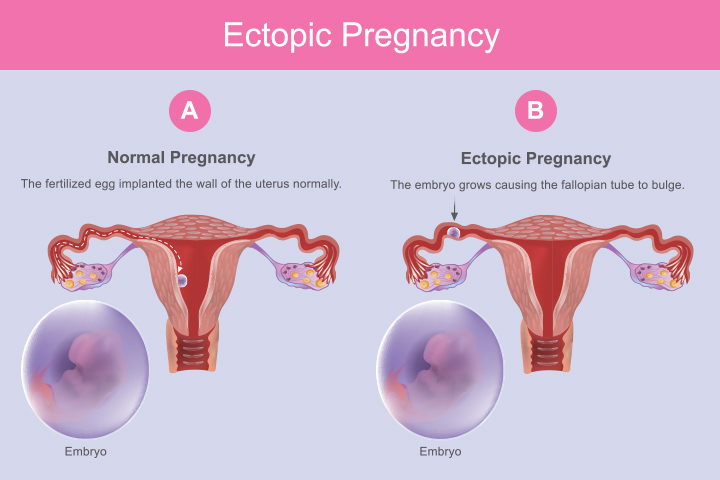
From fertilization to delivery, pregnancy requires a number of steps in a woman’s body. One of these steps is when a fertilized egg travels to the uterus to attach itself. In the case of an ectopic pregnancy, the fertilized egg doesn’t attach to the uterus. Instead, it may attach to the fallopian tube, abdominal cavity, or cervix. A pregnancy in which the fertilised egg implants outside the uterus.
Ectopic pregnancy :- A pregnancy in which the fertilised egg implants outside the uterus is know as ectopic pregnancy.
The fertilised egg don’t survive outside the uterus and if the remain outside the uterus than it may harm to other near by organs. If the fertilised egg left over then it may threats bleeding.
Signs and Symptoms :-
Pelvic pain
Vaginal Bleeding
Abdominal or stomach pain
Swelling over abdominal pain
Blood clots which irritates
Fainting
Vomiting
Pain in one side of body or shoulder pain
Risk factor in ectopic pregnancy:-
Pelvic inflammatory disease
Smoking and drugs and tobacco
Abdominal surgery
Pelvic surgery
STI (sexually transmitted infection
Endometriosis
An infection or inflammation of fallopian tube can cause partially or entirely blocked.
Scar tissue from a previous infection or surgery may impede the egg movement.
Previous surgery in pelvic region can cause adhesions.
Ectopic Pregnancy Diagnosis
Your doctor will probably do tests that include a pregnancy test and pelvic area test.They might give you an ultrasound to look at your uterus and fallopian tubes.
Treatment :-
Early treatment – Early treatment is at early stages of ectopic pregnancy which mean starting age of the infections. Starting infection include light bleeding, pain in abdominal pain. In this situation your doctor can recommend you medicines.
Late treatment – In server cases, doctors recommend surgery of pelvic region. Late stage of ectopic pregnancy include high bleeding, blockage of fallopian tube. In some case of surgery the previous pelvic infection or surgery can disturb in ectopic pregnancy surgery.
Prevention :-
Limiting the number of sexual partners and using of condoms during intercourse .
Don’t smoke. If you do, quit before you try to get pregnant.
Ignore medicine without recommend.
Don’t ignore early symptoms such as light bleeding.
Stop talking drink, cigarette or drugs.
Book an appointment today with best IVF doctor in Indore. Dr. Shweta Kaul Jha is one of the best IVF specialists in Indore. She provides the best IVF, IUI, ICSI, Test tube baby, infertility treatment in Indore at very affortable price. Dr. Shweta Kaul Jha has many years of experience in IVF treatment. Visit for more information https://www.carewomenscentre.com/ and call now 8889016663.
IVF – in vitro fertilization is not a God gifted treatment it is perform by expert doctor’s which are also humans and sometime they also get unsuccessful in performing treatment . At this time we must have patience and get to know the proper reasons for the failure of the treatment. We know that the news of not having a baby for a female is itself harmful condition for her. Earlier there was no treatment to overcome this problem but today it is very easy to overcome it. Some treatment like IVF, icsi, iui etc. are there for having a successful pregnancy. But sometimes it can also goes wrong or unsuccessful due to some reasons ; the reasons can be improper formation of egg, weak endometirium lining, taking of excess unhealthy or Unpricribe pills etc.
Reasons of failure IVF :-
Failure in achieving proper baseline –IVF failure can happen if the basic requirements to start the cycle aren’t fulfilled. Sometimes even after usage of pills and hormonal supplements, the female reproductive organ isn’t able to reach the required form. Sometimes having barrier pills and contraceptive barrier during sex can further lead to a problem such as in IVF, ICSI etc.
Failure in producing enough number of eggs – in some female irregular menstrual cycle from teenage and having pills during the cycle without consult to the doctor can lead to less development of eggs which is an important requirement for IVF . In some cases after use of FSH (follicles stimulating hormone) and another stimulating hormone the ovary isn’t able to produce multiple follicles or even if multiple follicles are produced not all of them contain eggs.
Quality of Egg – Not every egg formed is alive or can able to go through the treatment . And that is the reason to produce multiple follicles is to produce multiple eggs that can increase the chance of a healthy fertilized egg to be transferred.
Implantation failure – if the experts are successful in producing fertilized eggs and are able to keep them safe until they multiply and reach the stage to be transferred into the uterus, the process of implantation is still risky. The failure of implantation mainly occurs due to fertilized egg having any chromosomal disorder or unhealthy endometrium lining.
The other major factors leading to a failed attempt at IVF are the ones associated with the lifestyle of the patients. That mean the positive environment during ivf, healthy lifestyle, tension free, stress free etc.
Having failure one time is not that we can’t trust second time. It will be difficult to maintain that much trust and also some family can’t conceive the treatment financially. But if we can ; we must.
Care Womens Centre is a one of the Best IVF centers in Indore. The specialty of the Care Womens Centre is that up to 80% of successful infertility treatment is done here. We provide services like IVF, IUI, ICSI, Egg / Sperm / Embryo Donor, Cryopreservation / Sperm / Embryo Freezing, Test tube baby at very low cost. Dr Shweta Kaul Jha is an experienced IVF specialist in our hospital, who has been providing services to Care Womens Centre for many years. If after several years of your marriage, you are not able to give birth to your child, then do come at Care Womens Centre once, because this hospital is famous for successful IVF. Book an appointment today call now 8889016663 and visit https://www.carewomenscentre.com/ for more information.
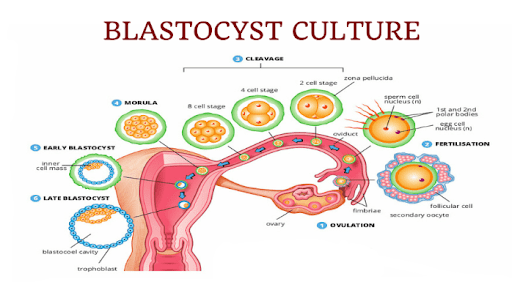
Blastocyst culture refers to growing the embryos in the laboratory for two more days at which point they are referred to as blastocyst embryos. Blastocyst transfer simply means that the blastocyst embryos are transferred to the woman’s uterus on day 5 in exactly the same way that day 3 embryos . Three important factors previously limited the number of embryos that could survive to this stage (development stage)
First, the “health” of any embryo will decided its ability to continue to grow and divide. Several eggs may have initially fertilized, but only a few will progress to the four-cell stage on day two in culture, fewer still to the eight-cell stage on day three in culture, and even fewer will develop into blastocysts. This stage can be called as “survival of the fittest.”
he second, limiting factor in preventing continued growth of embryos in culture had been the culture media Or blastocyst media.. These are rich in life-sustaining nutrients that give the embryos every chance to reach there full inherent potential. As a result , embryos will now be exposed to specific media that are designed to meet the nutritional requirements of each stage of development.
Third, even with embryos of good growth potential and optimal culture media, the experience and expertise of the laboratory embryologists doing this important work is critical to achieving good blastocyst development.
Advantages of blastocyst :-
1) It makes a better selection of embryos possible. Embryos which reach this stage offer a better implantation capacity. It is for that reason that we limit transfers to 1 blastocyst (or maximum 2), reducing the risk of multiple births.
2) It allows a more physiological synchronisation between the embryonic phase and the responsiveness of the endometrium.
3) It facilitates the correct supervision of embryo development and the transfer of only the embryos selected by Nature to reach an optimum state of development, which in turn allows for a higher implantation rate.
Disadvantage of blastocyst transfer :-
4.However, if the culture environment is suboptimal, delayed embryo development and even embryonic arrest will occur – at least in some cases. Therefore, if the culture system and quality control in an IVF lab are inconsistent, good results will not be obtained. The only disadvantage is lack of facilities and knowledge to embryologists.
Care Womens Centre is a one of the Best fertility hospitals and IVF centers in Indore. Our hospital is famous for infertility treatment in Indore. Our hospital has many experienced ivf specialist doctors, who provide services like IVF, IUI, ICSI, test tube baby at very affordable prices. If you are suffering from infertility then do come Care Womens Centre Indore once. Book an appointment today call now 8889016663 and visit https://www.carewomenscentre.com/ for more information.
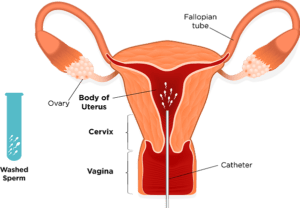
Intra uterine insemination (IUI) involves a laboratory procedure to separate fast moving sperm from slower or dead sperm. The fast moving sperm are then placed into the woman’s womb close to the time of ovulation when the egg is released from the ovary in the middle of the monthly cycle Or menstrual cycle.
Goal of IUI :
The goal of IUI is to increase the number of sperm that reach the fallopian tubes and subsequently increase the chance of fertilization.
IUI provides the sperm an advantage by giving it a head start but still requires a sperm to reach and fertilize the egg on its own. It is a less invasive and less expensive option compared to In Vitro Fertilization.
Conditions why IUI require for :-
Unexplained infertility
A hostile cervical condition, including cervical mucus problems
Cervical scar tissue from past procedures which may hinder the sperms’ ability to enter the uterus
Ejaculation dysfunction
IUI is not recommended for the following patients:
Women who have severe disease of the fallopian tubes
Women with a history of pelvic infections
Women with moderate to severe endometriosis.
Risk during intra uterine insemination :-
1) Infection. There’s a slight risk of developing an infection as a result of the procedure.
2) Spotting. Sometimes the process of placing the catheter in the uterus causes a small amount of vaginal bleeding. This doesn’t usually have an effect on the chance of pregnancy.
3) Multiple pregnancy. IUI itself isn’t associated with an increased risk of a multiple pregnancy — twins, triplets or more. But, when coordinated with ovulation-inducing medications, the risk of a multiple pregnancy increases significantly. A multiple pregnancy has higher risks than a single pregnancy does, including early labour and low birth weight.
Care Womens Centre is the most famous Fertility hospital in Indore, in this hospital we provide treatments like IVF, IUI, ICSI, Test tube baby and infertility at very low cost. Dr Shweta Kaul Jha is a very experienced IVF specialist of this hospital, Who has many years experience in IVF. Book an appointment today call now 8889016663 and visit https://www.carewomenscentre.com/ for more information.
Prenatal Exercise:- Regular exercise during pregnancy is important for your health and well-being. It can improve posture, prevent backaches, decrease fatigue, relieve stress, and build stamina you will need for labor and delivery. It may also help prevent a type of diabetes that develops during pregnancy (gestational diabetes).
Most aerobic, resistance, and flexibility exercises are safe during pregnancy, but because each woman and each pregnancy is different it’s important to consult your doctor before starting any exercise program while pregnant.
Exercise and Heart Rate:- In the past the American College of Obstetricians and Gynecologists recommended pregnant women not raise their heart rate above 140 beats per minute during exercise, but this is no longer a guideline. Most women who were physically active prior to becoming pregnant can maintain physical activity during pregnancy. You may have to reduce the intensity; work out at a comfortable level, such as with low impact aerobics versus high impact. Exercising at about 70% of your maximum heart rate causes no change in the fetal heart rate.
Previously Sedentary:- Whether you were active before your pregnancy or not, you can exercise while pregnant. The American College of Obstetricians and Gynecologiysts states, “If you are active, pregnancy need not cause you to alter your fitness routine,” and, “If you have not been active, now is a good time to start.” For most women, exercising during pregnancy is safe.
Who Should Not Exercise During Pregnancy?:- However, some women should not exercise during pregnancy. If you have a medical condition such as asthma, heart disease, or diabetes, you should consult your doctor before exercising.In addition, you may be advised to avoid exercise if you have certain pregnancy-related conditions, including bleeding or spotting, low-lying placenta, threatened or recurrent miscarriage, previous premature births or history of early labor, or a weak cervix. Talk to your doctor before starting exercise for some guidelines on what you can and cannot do.
Wet Your Whistle :- Make sure you drink plenty of water when you work out during pregnancy. Try drinking 8 ounces of water 20-30 minutes before you start exercise, and 8 ounces every 20-30 minutes during your workout. Also remember to hydrate following your routine. If you are concerned you will need to use the bathroom more often because you are drinking more, work out at a gym where there is a restroom available, or if you walk or run outside, stay close to home in case you need to make a pit stop.
What Should a Pregnancy Exercise Program Consist Of?:- Consult with your doctor for an individualized exercise program that is right for you. However, if you are healthy and your pregnancy is without complications there are some general guidelines for exercise that most women can follow. Begin workouts with a five-minute warm-up and five-minute stretch. Try to get about 15 minutes of cardiovascular activity and monitor your heart rate. Gradually slow down and lessen the intensity of your cardio, and finish up with some gentle stretches.
What Exercises Are Safe During Pregnancy?:- When you’re pregnant, you can do most types of exercise. Just don’t overdo it. Activities such as swimming, walking, indoor stationary cycling, step or elliptical machines, or low-impact aerobics classes can be very beneficial with a low risk of injury to you or your baby.Some other types of exercise can still be continued but you may find you need to modify your movements. For example, changes in balance may affect your tennis game, and your runs may need to be slowed to accommodate your pregnancy. As you progress in your pregnancy you may want to consider exercises that do not require balance or coordination.
Stretching Exercises:- Stretching is recommended exercise to keep your muscles limber, and to warm up before other more intense workouts. The following slides review some simple stretches you can do before or after your workouts.
Stretching Exercises: Shoulder Rotation:- Shoulder rotations help retain range of motion. Start by bringing your shoulders forward, then rotate them up toward the ears, and back down again. Reverse directions by pulling shoulders back, up toward the ears, and then back down again. Complete four rotations in each direction.
Stretching Exercises: Swim :- Swimming motions can reduce muscle tension and retain flexibility. Start with your arms at your sides. Bring your right arm up and extend your body forward while twisting to the side, as if you were swimming the crawl stroke. Repeat with the left arm, and complete this sequence 10 times.
Stretching Exercises: Thigh Shift:- Keeping your legs limber and flexible can help maintain balance as your pregnancy progresses. To do a thigh shift, start by standing with one foot about two feet in front of the other, toes pointed forward. Lean forward with your body weight supported by your front thigh. Change sides and repeat, completing four stretches on each side.
Stretching Exercises: Leg Shake:- A leg shake can help maintain circulation. Sit down with your legs and feet extended. Move your legs up and down in a gentle shaking motion.
Stretching Exercises: Ankle Rotation:- Foot and ankle swelling during pregnancy is common and ankle rotations can help with circulation and may reduce some fluid buildup. Sit with legs extended and toes relaxed. Rotate your feet in large circles using your whole foot and ankle. Rotate four times on the right and four times on the left.
Kegel Exercises:- It is also important to exercise the muscles supporting the bladder, uterus, and bowels. Kegel exercises target these muscle groups and strengthening them during pregnancy can help you control these muscles during labor and birth.To do Kegel exercises that target the pelvic floor, imagine you are trying to stop the flow of urine or trying not to pass gas. Try not to move your legs, buttocks, or abdominal muscles. Kegels are so subtle no one should notice you are doing them. Contract the muscles and hold for a slow count of five, then relax. Repeat ten times for one set. Do 5 sets per day.
Tailor Exercises :- Tailor exercises can help relieve low back pain by strengthening the pelvic, hip, and thigh muscles.To perform a tailor sit: sit on the floor with your knees bent and ankles crossed. Lean forward slightly, keeping your back relaxed and straight. You can use this position throughout the day whenever possible.To perform a tailor press: sit on the floor with knees bent and the soles of your feet touching. Hold onto your ankles and gently pull your feet toward your body. Place your hands under your knees and inhale. Press your knees down against your hands, and at the same time press your hands up against your knees for counter-pressure. Hold for a count of five.
Yoga Exercises:- Yoga has many health benefits, but it may not be the right type of exercise while you are pregnant. Only try a prenatal yoga class where the poses are specifically geared toward pregnant women. If you do attend a regular yoga class, make sure you inform the instructor beforehand that you are pregnant and ask them to modify poses for you. Avoid “hot yoga” classes while pregnant.
Care Womens Centre is a best Infertility treatment hospital in Indore. The name of Care Women Centre is one of the top 10 IVF centers of madhya pradesh. Our hospital has an experienced team of ivf specialists doctors who provide you the pleasure of becoming a father through ivf. We provide services like IVF, IUI, ICSI, test tube baby at very low cost, if you are suffering from infertility or your ivf has failed, then come at Care Women Centre once. Book an appointment today call now 8889016663 and visit https://www.carewomenscentre.com/ for more information.






 Best infertility hospital in indore